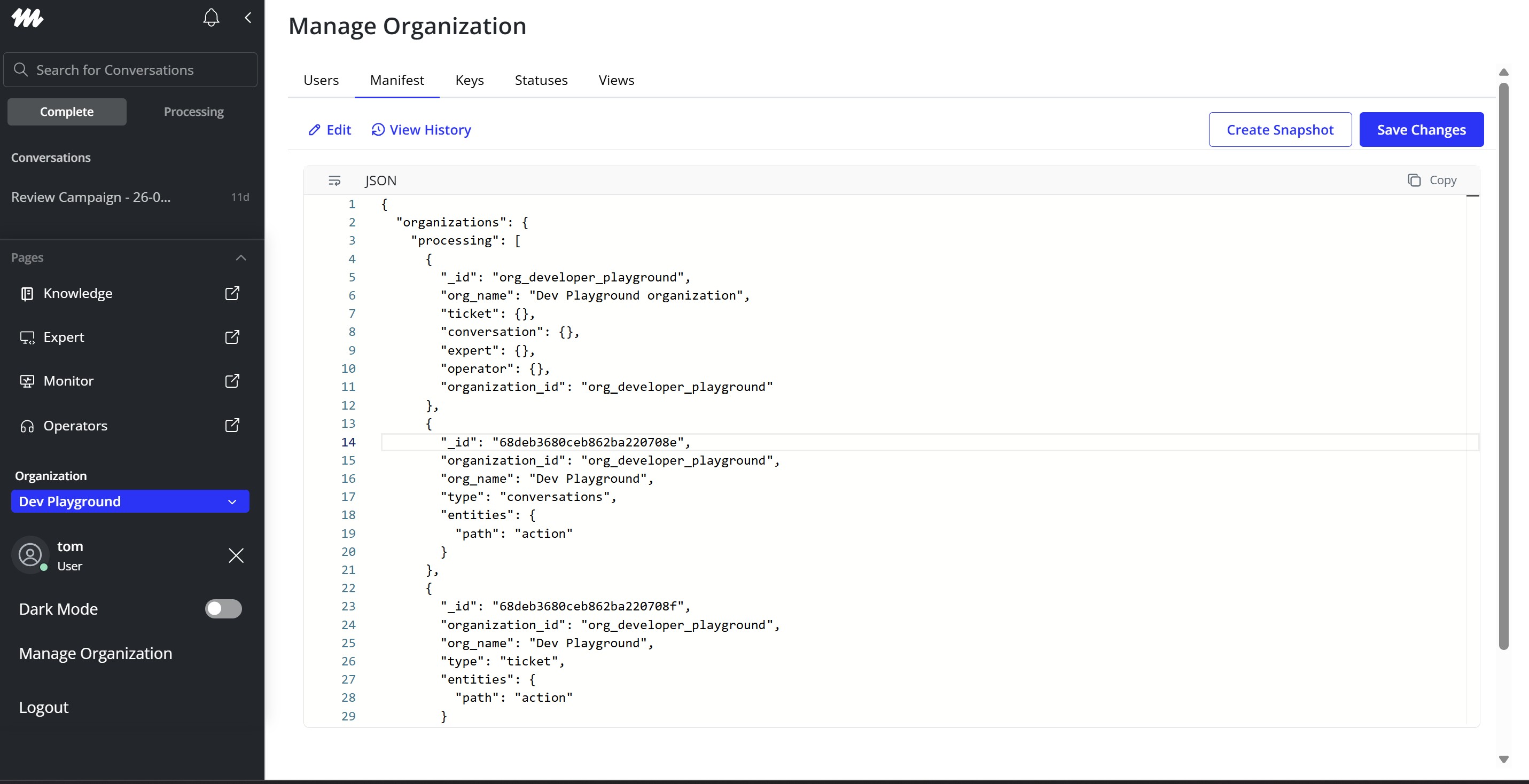
Portal UI
Portal
The MelodyArc Portal is an optional web-based workspace for managing conversations, configuring AI-assisted workflows, and administering your organization. MelodyArc is designed to run headless without a UI, or embedded inside your existing enterprise interfaces - the Portal is one way to interact with the platform, not a requirement.
Personas
MelodyArc is built around three core personas. While business titles vary by enterprise and process type, the platform is designed to serve these roles:
| Persona | Who they are | What they do in the Portal |
|---|---|---|
| Associate | The person who does the work - often managing a team of AI Operators or other systems orchestrated by MelodyArc | Manages conversations, reviews AI Operator outputs, and takes action on tasks |
| Designer | The person who knows the end-to-end process and influences it with business requirements - often a program manager or business leader | Configures organizational settings, defines statuses and views, and manages knowledge |
| Expert | The person who enables work by configuring MelodyArc's platform to orchestrate the process across business context, AI, and people | Builds and maintains AI points, operators, and platform configuration |
Getting Started
Accepting an Invite
When an administrator adds you to an organization, you'll receive an invitation email with a link. Open the link, complete your identity provider login if prompted, and your account will be activated for that organization.
Logging In
- Open your portal URL in a browser.
- If you have no active session, you are redirected to the login page.
- Complete your organization's identity provider login flow.
- On success, you land on the Home page.
Troubleshooting:
- Login loop - clear site cookies and try again.
- "Unauthorized" after login - contact your administrator to verify your account permissions.
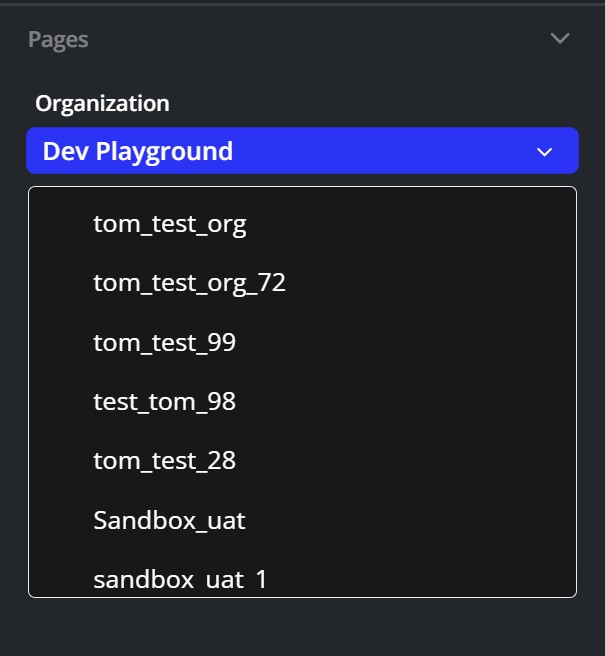
Switching Organizations
If your account belongs to multiple organizations, open the organization selector at the bottom of the left nav and select your target org. The portal reloads tasks, settings, and permissions for the selected organization.
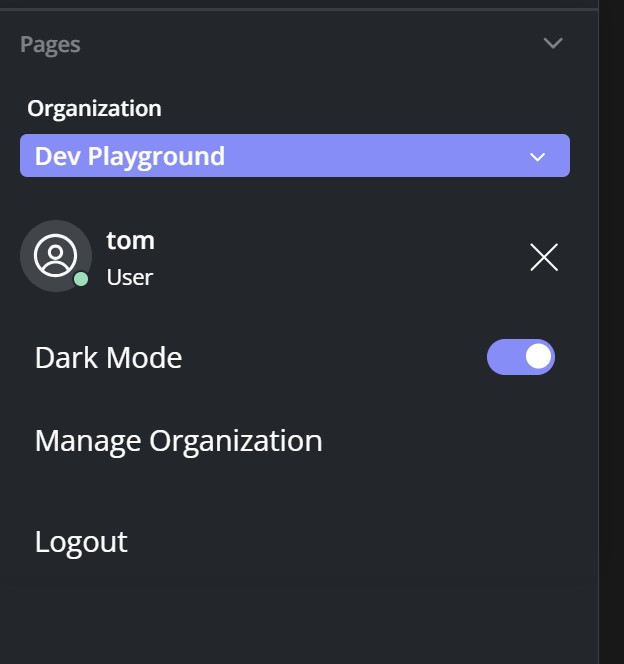
Dark Mode
Open the settings menu at the bottom of the left nav to toggle dark mode. Your preference is saved automatically.
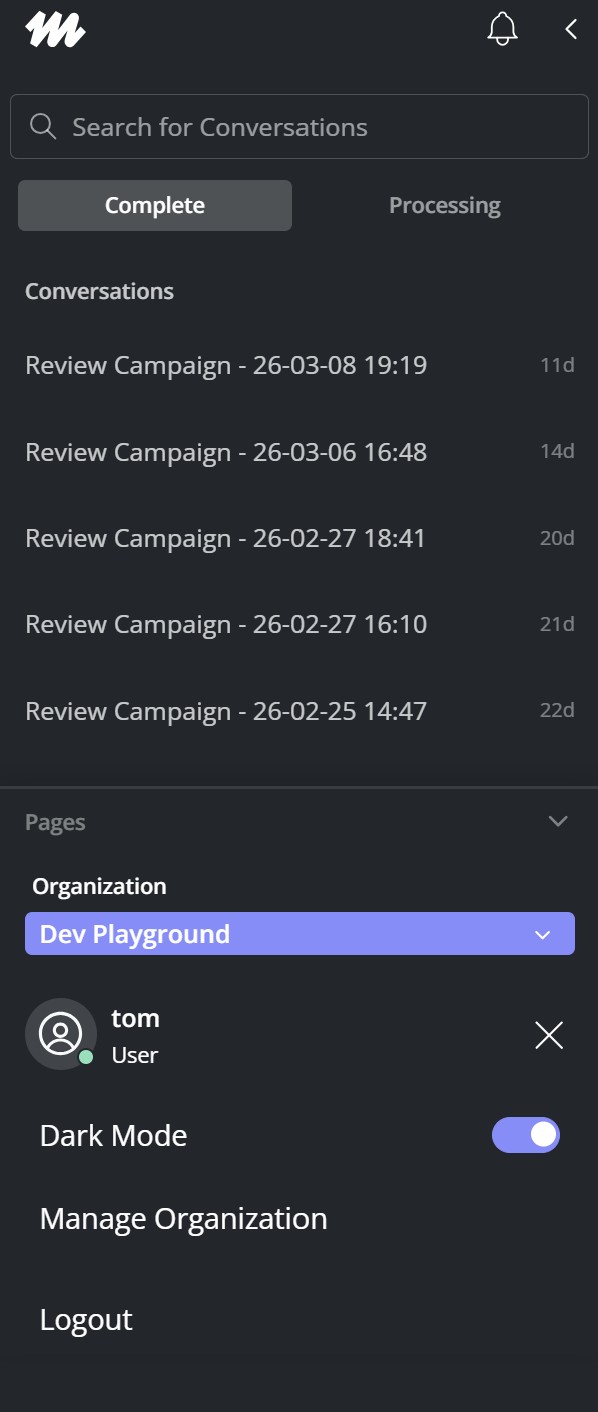
Navigation
The left navigation rail is your primary way to move through the portal. Page links are permission-based - you'll only see sections your role has access to.
| Section | Description | Persona |
|---|---|---|
| Conversations | Your active tasks, sorted by most recent activity. Actionable items (unread messages) appear at the top. | Associate |
| Pinned | Tasks you've manually pinned for quick access. Visible regardless of the active status filter. | Associate |
| Knowledge | Browse and search your organization's business context and policies. | Associate, Designer |
| Expert | Create and edit AI points, operators, and platform configuration. | Expert |
| Monitor | Search and triage tasks across your organization at scale. | Designer, Expert |
| Manage Organization | Administer users, roles, keys, statuses, and views. | Designer, Expert |
| Operators | Create and manage AI operator personas. | Expert |
Associate Workspace
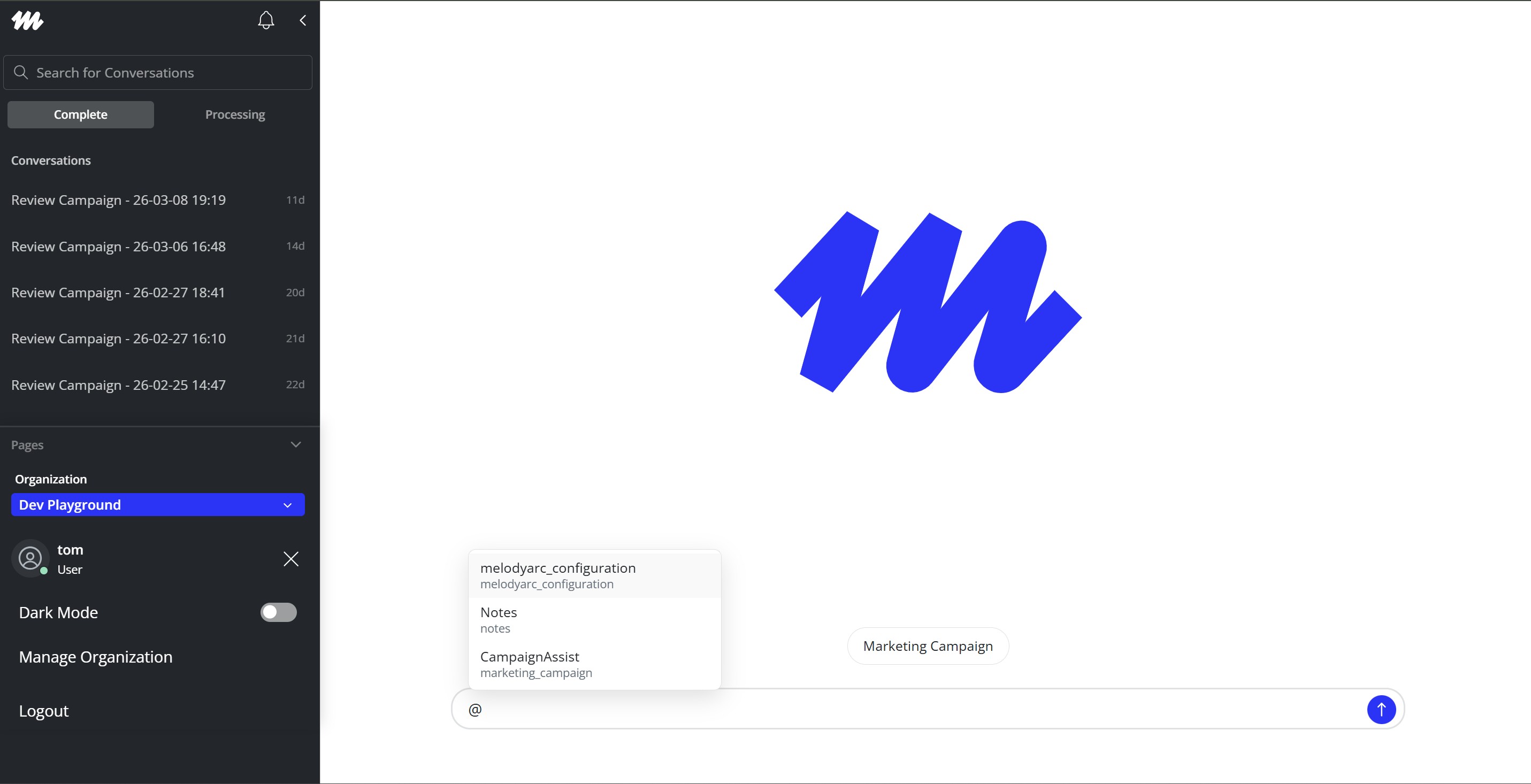
The Home page is the primary workspace for Associates. Above the chat window, preset quicklinks give one-click access to your most common workflows. To engage an AI Operator directly, type @ in the chat window and select from the available operators.
Conversations
The Conversations list in the left nav shows all your active tasks, sorted by most recent activity. Tasks with unread messages appear at the top. Conversations may be configured to display by task ID or friendly name depending on your organization's settings. Click a conversation to open it - it is automatically marked as read.
Use the search bar above the list to find a task by ID, conversation ID, or note content. Tasks can be pinned for quick access and remain visible regardless of the active status filter.
Active Task View
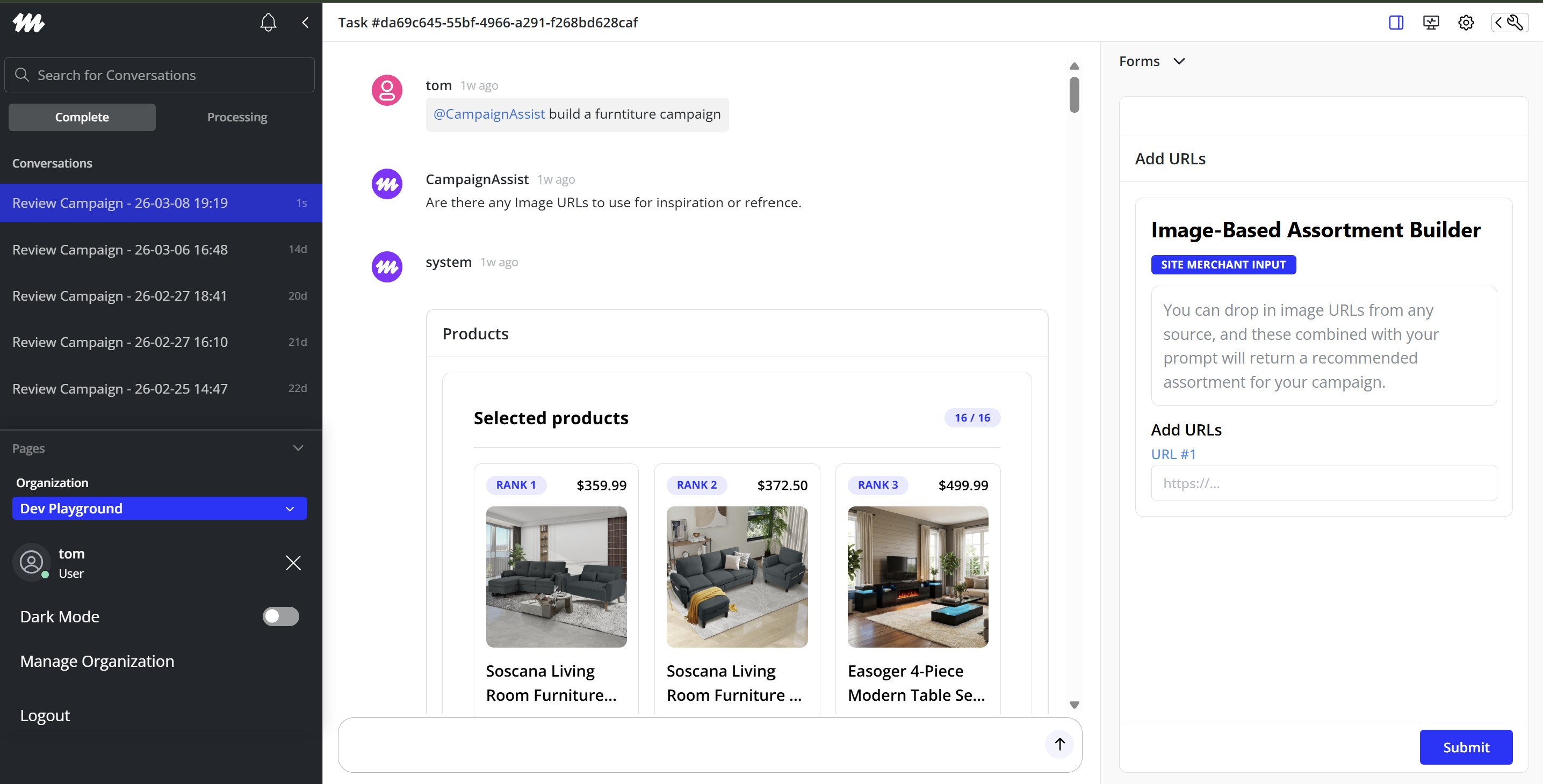
Once a task is selected, the home view switches to the active task panel. All customer and team activity appears in a single conversation timeline.
- Use
Enterto send a message,Alt+Enterto insert a new line. - AI Operator-generated components and task actions appear inline in the timeline.
- Items requiring your review or input open in the Action Panel on the right.
Expert - Point Authoring
For Experts
The Expert page is the full-featured workspace for building and maintaining the AI knowledge, logic, and configuration that powers MelodyArc across your organization.
Browsing the Point Tree
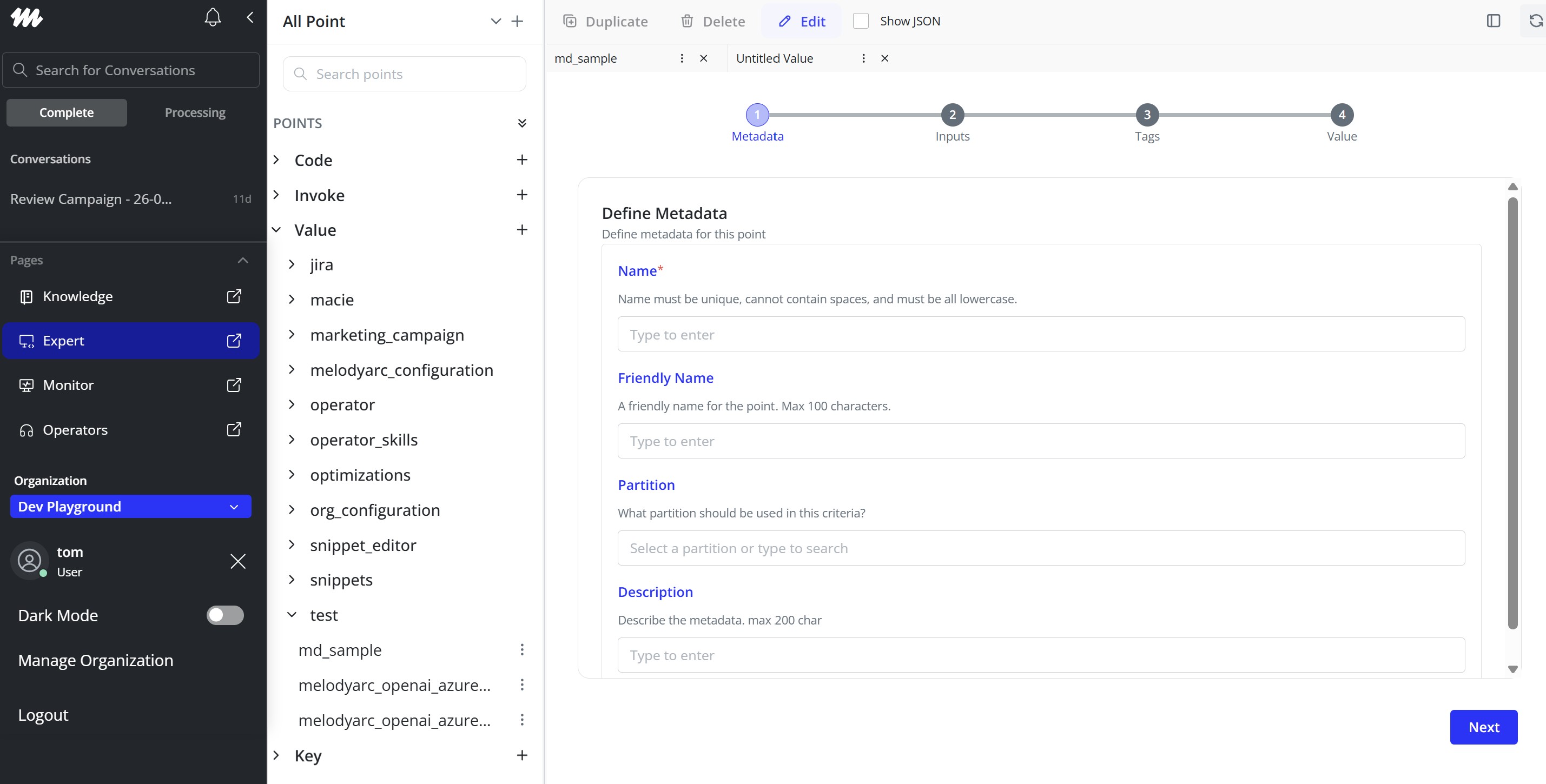
The left sidebar organizes all points by type: Code, Invoke, Value, and Key - and related elements like Configuration and Platform Search. Use the search bar to find a specific point, or expand groups to browse. Click any point to open its detail panel.
Creating a Point
- Click + New Point in the toolbar.
- Fill in the required metadata: name, friendly name, partition, and description.
- Complete the remaining steps: Inputs, Actions, Tags, Custom Fields, Response, and Criteria.
- Click Confirm to publish immediately, or Save as Draft to come back later.
Editing a Point
Click the pencil icon on any point to open the editor. All existing values are pre-filled. Save when done. Expanded folders in the point tree remain open after saves so you don't lose your place.
Platform Search
Platform Search lets you build sets of points that are reusable across different organizations via import and export. Sets can also serve as useful filters on the point tree - for instance, filtering only to points related to a specific configuration or AI Operator. Platform Search points appear under the Search group in the point tree, and the workflow pane keeps long query and filter lists scrollable without disrupting the rest of the editor.
Platform Defaults
Many point types have a platform-managed default version. When one exists, a Platform Point indicator appears in the detail panel.
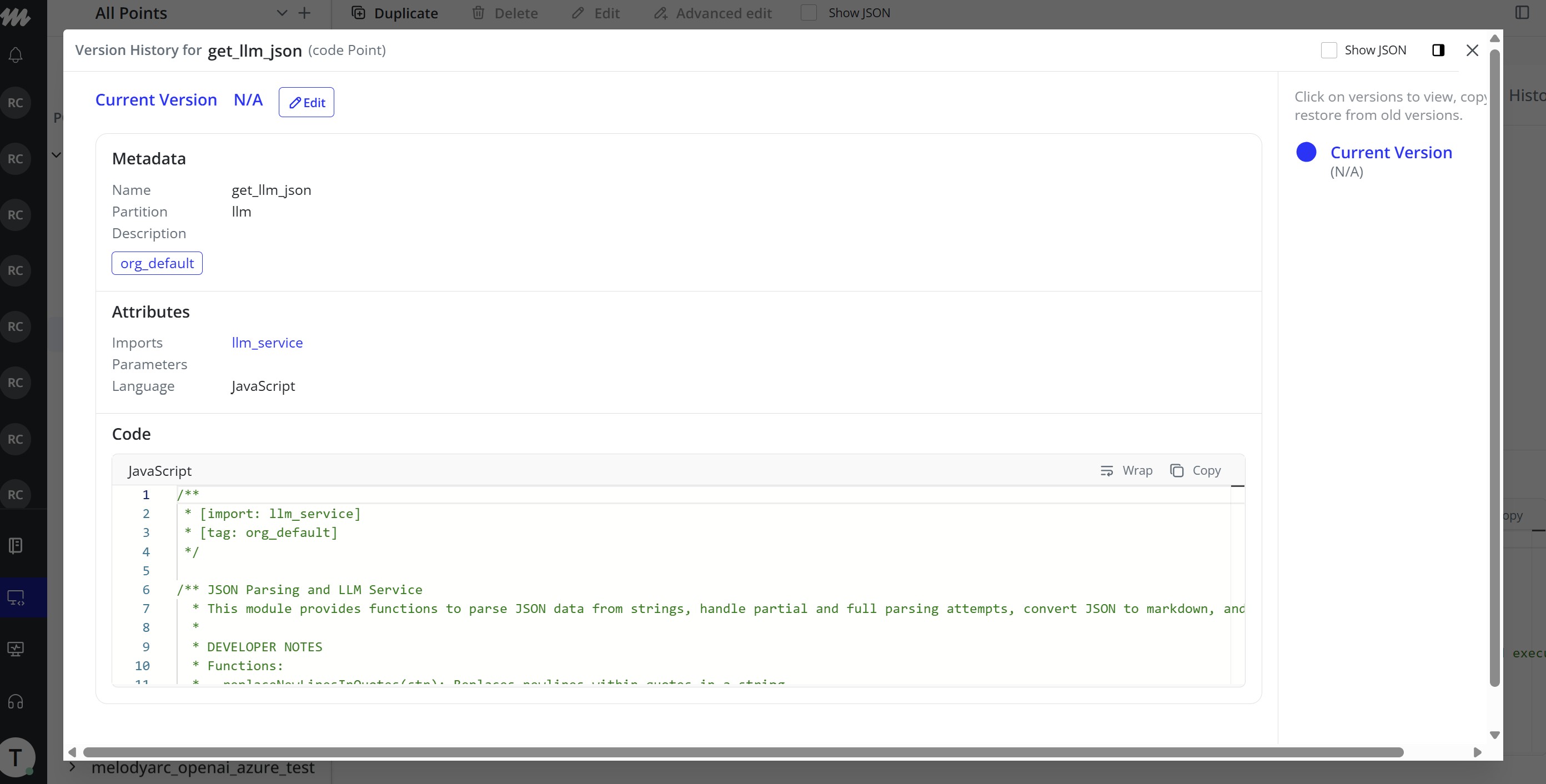
- Use Point History to inspect the platform default payload alongside your organization's version.
- Use Revert to platform default to remove your organization's override and return to the platform-managed version.
Import and Export
Use the import/export toolbar to move points in bulk across environments or organizations. Platform Search sets appear under the unified Search grouping in export and import views regardless of legacy or canonical input type.
Operators
For Experts
AI Operators are agents that take action using real-world business systems and enterprise data. They are a collection of points, grouped under one configuration, that have the skills to navigate complex processes via the Point Engine to accomplish work. They collaborate with human Associates, other Operators, enterprise systems via API integration, and even AI agents developed elsewhere that your enterprise may want to orchestrate through MelodyArc.
For a full walkthrough on building your first operator, see Setting Up Your First Operator.
Monitor
For Designers and Experts
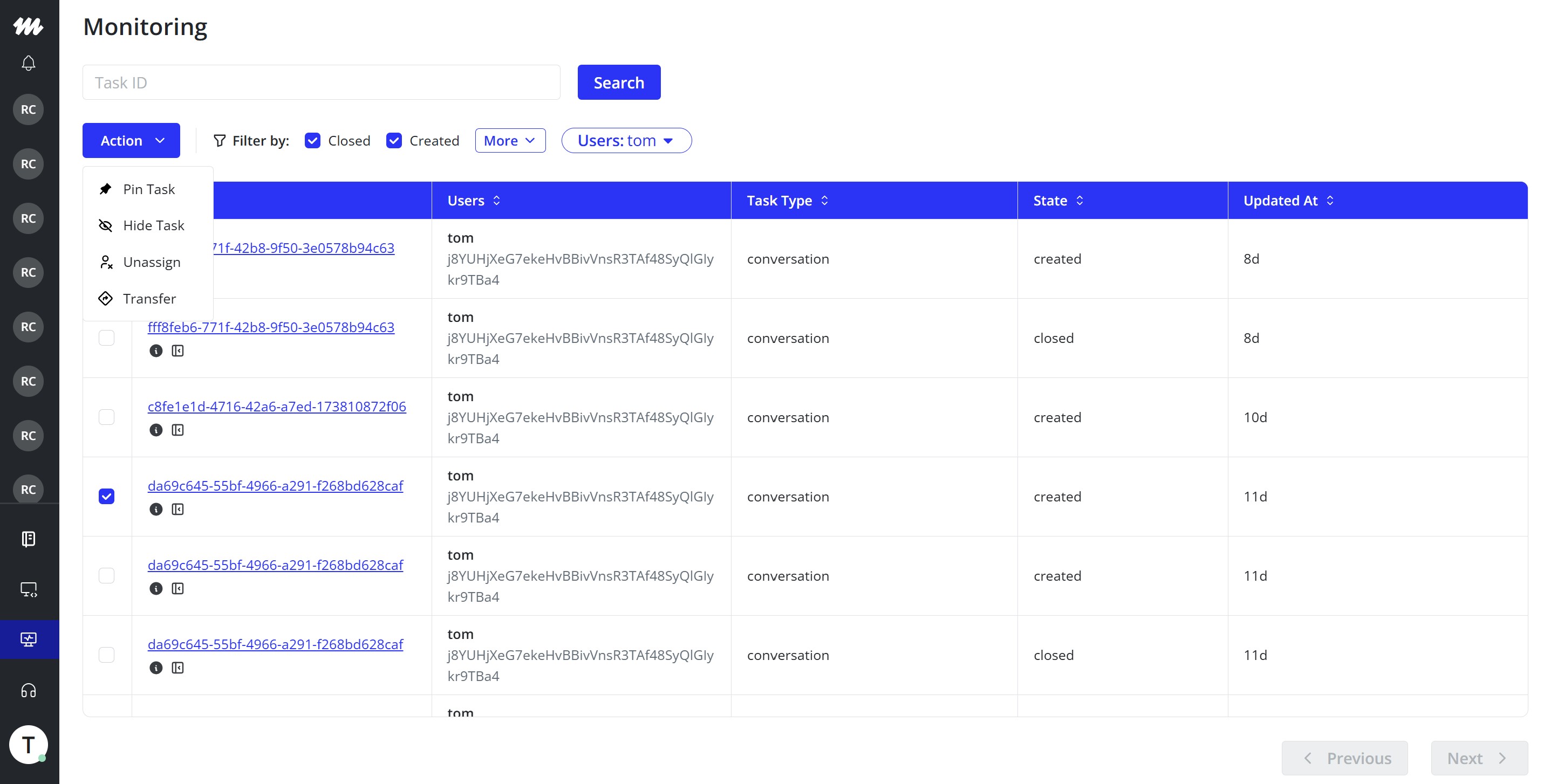
The Monitor page provides a high-volume view of tasks across your organization - useful for supervising active work, triaging backlogs, and investigating specific conversations.
- Open Monitor from the left nav.
- Enter a task ID or search terms to locate specific tasks.
- Apply filters - state, associate, queue, and more - to narrow results.
- Select tasks in the table to take bulk actions.
- Use the pager to move through large result sets (>200 tasks).
Managing Your Organization
For Designers and Experts
The Manage Organization page is the administrative hub for your organization's configuration. Access is permission-based.
Users, Roles, and Keys
- Users - Search for users, send invites, block/unblock, or remove access.
- Roles - Create and edit role permission sets that control what each user can see and do in the portal.
- Keys - Create, update, and deactivate API keys for your organization.
Statuses
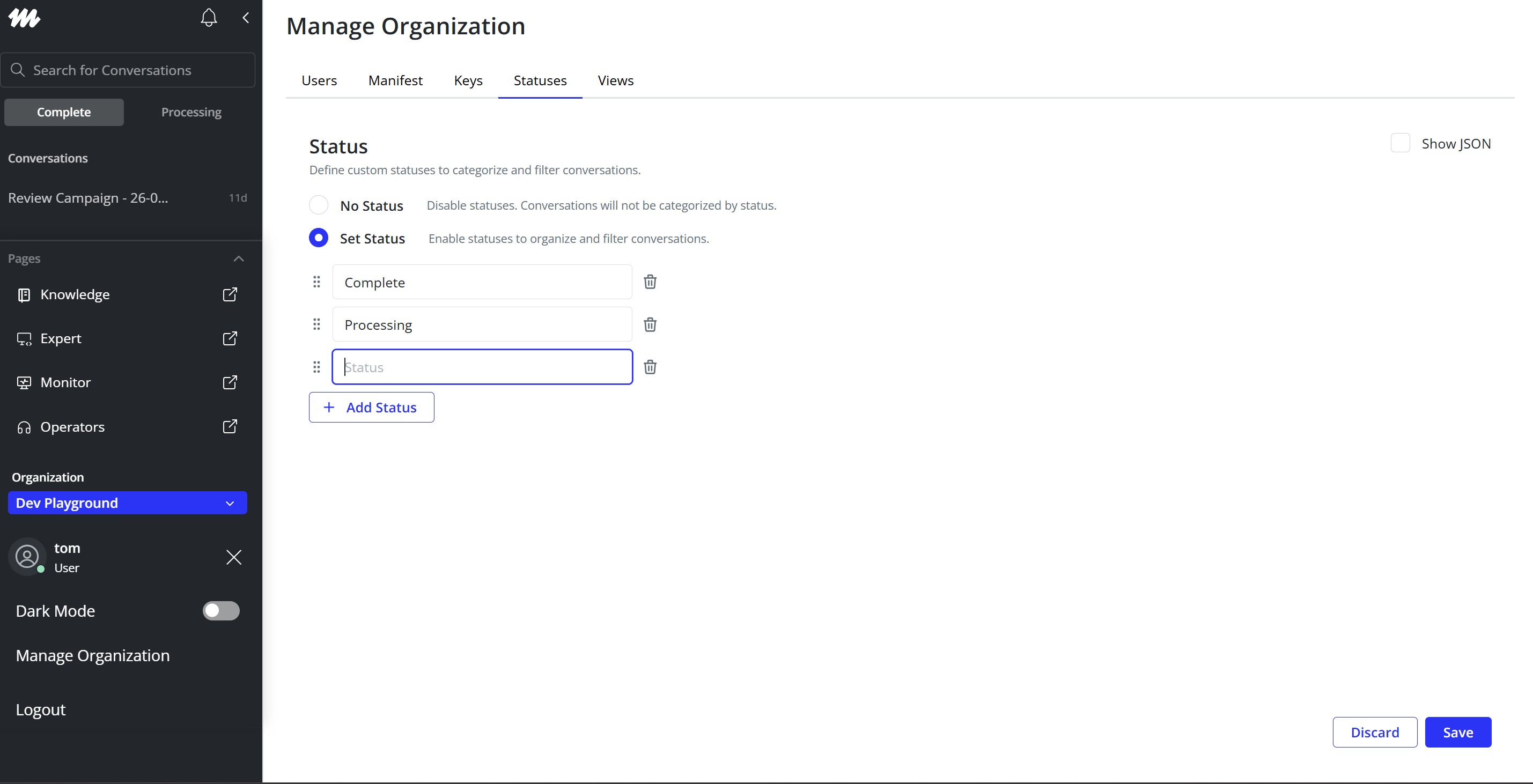
Statuses define the task filter options that appear in the left nav, allowing Associates to quickly segment their conversation queue by workflow state.
- Open the Statuses tab.
- Choose No Status to disable filtering, or Set Status to define an ordered list.
- Add status rows - press
Enterto add a new row without leaving the keyboard. - Click Save. The left nav updates immediately for all users in the organization.
Views
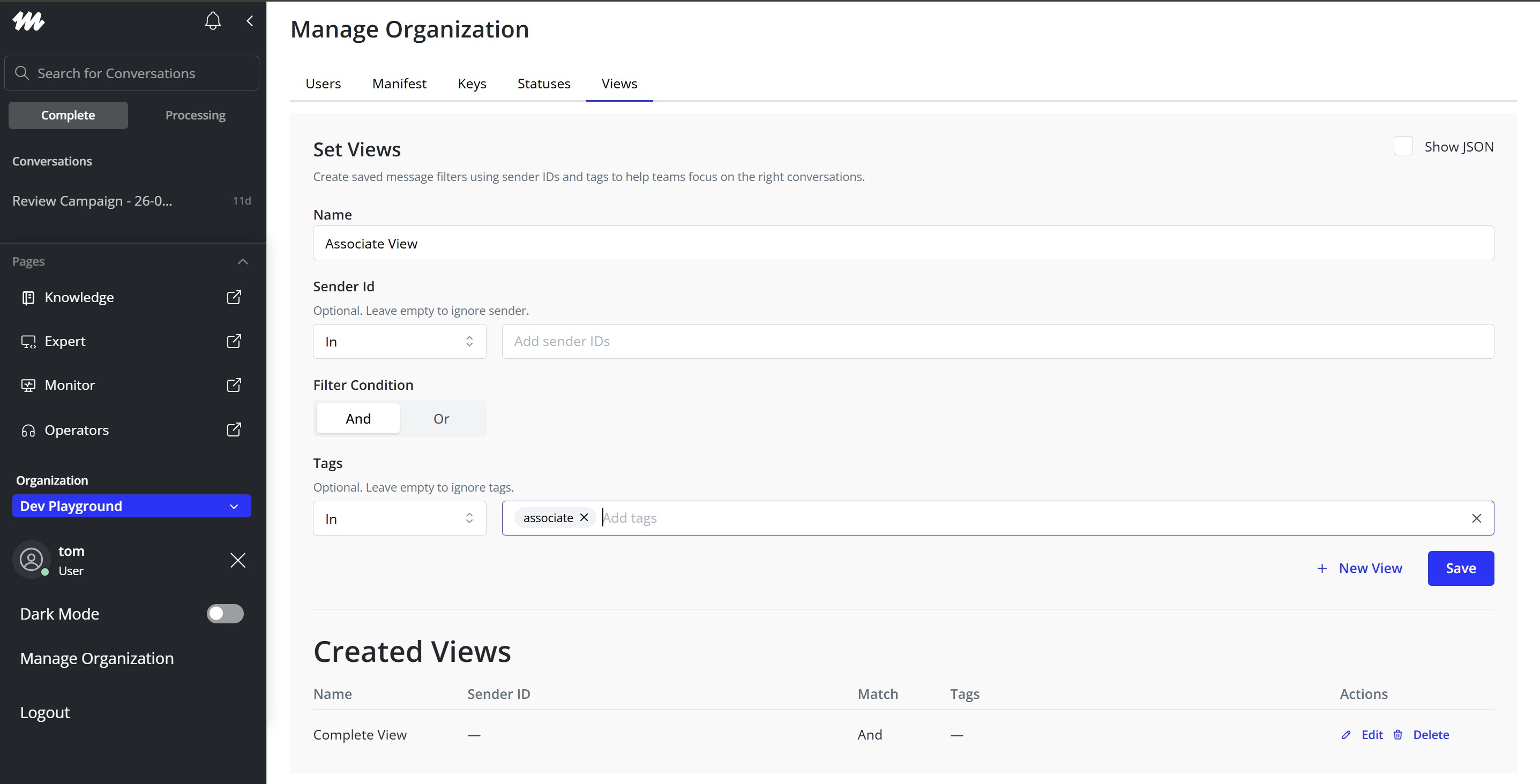
Views are saved message filters that Associates can apply on the Home page to focus on a specific slice of their conversation queue.
- Open the Views tab.
- Enter a view Name (must be unique within your organization).
- Optionally add Sender ID or Tags conditions.
- Click Save. Associates can select saved views from the Home page filter dropdown.
To remove a view, click Delete next to it and confirm.
Org Manifest and Snapshots
The organization manifest is the configuration backbone of your MelodyArc deployment. Designers and Experts can edit the manifest directly in JSON, with snapshot history providing a full audit trail and rollback capability.
- Open the Manifest section of Manage Organization.
- Toggle Edit mode.
- Make your changes in the JSON editor.
- Click Save Changes - you'll be prompted to name the snapshot.
- Use View History to browse, restore, or download previous snapshots.