
Operators
Operators
The MelodyArc Point Engine is purpose-built for agentic AI. An AI Operator is a collection of points that work together to accomplish a role — combining AI reasoning with access to knowledge bases, live enterprise systems, and human associates at exactly the right moments. The result is a new model for how work gets done: associates managing teams of AI Operators across recordable, auditable workflows with the flexibility to traverse thousands of possible execution paths.
AI Operators are not scripts or chatbots. They interpret input, reason about goals, select from a library of modular skills, and take action — across systems, channels, and teams — with associates in control of the outcomes that matter most.
What Operators Are Built From
Every AI Operator is assembled from three types of capability:
| Capability | Point Type | What It Provides |
|---|---|---|
| Knowledge | Value Points | Structured data, policies, decision criteria, and contextual memory the AI Operator reasons against |
| Integrations | Code Points | Live connections to enterprise systems — CRMs, ticketing platforms, APIs, communication channels |
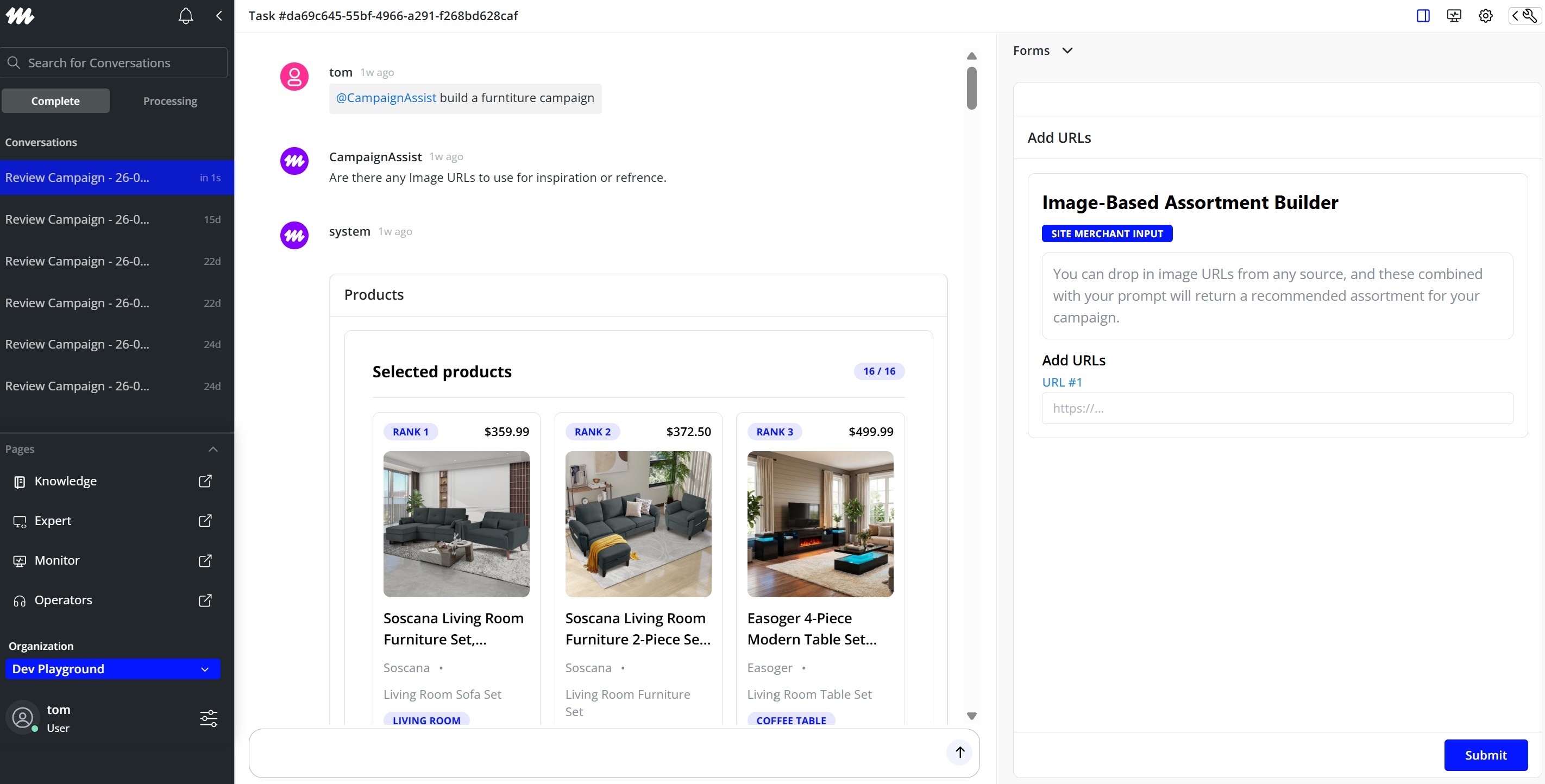
| Human-in-the-loop | Form Builder / Chat Service | Structured handoffs to associates for input, review, approval, or escalation at key decision points |
This combination is what makes AI Operators production-ready. They are not isolated language models — they are grounded in your organization's data, connected to your systems, and designed to keep associates in control where it matters.
Because an AI Operator is effectively a defined set of points, it is portable. Once built, an operator can be exported and deployed across any organization within the enterprise where MelodyArc is in use — enabling teams to share, reuse, and build on proven operator configurations rather than starting from scratch.
Operator Anatomy
Each AI Operator is composed of the following core elements.
Operator Role
Defines what the operator is responsible for — its functional domain and the types of input it handles. This functions as the operator's job description and often mirrors a human role, such as a customer service associate, account executive, or data analyst.
Integrations
Operators connect to external systems and data sources through code points. These include:
- Internal tools such as CRMs, ticketing systems, and dashboards
- External APIs for scheduling, product data, and communication platforms
- Real-time data feeds from enterprise systems
Integrations are what allow AI Operators to take meaningful action — not just generate responses, but execute steps inside and outside the organization.
Skills
Operators are composed of skills — discrete, modular capabilities that handle tasks like answering a question, performing a lookup, triggering an action, or coordinating a workflow. Skills are reusable across operators, enabling flexible composition and rapid iteration.
Context Memory
Operators maintain both persistent and session-based memory. This allows them to hold state across interactions, recall prior context, track conversation history, and reason about ongoing goals — across a single session or over time.
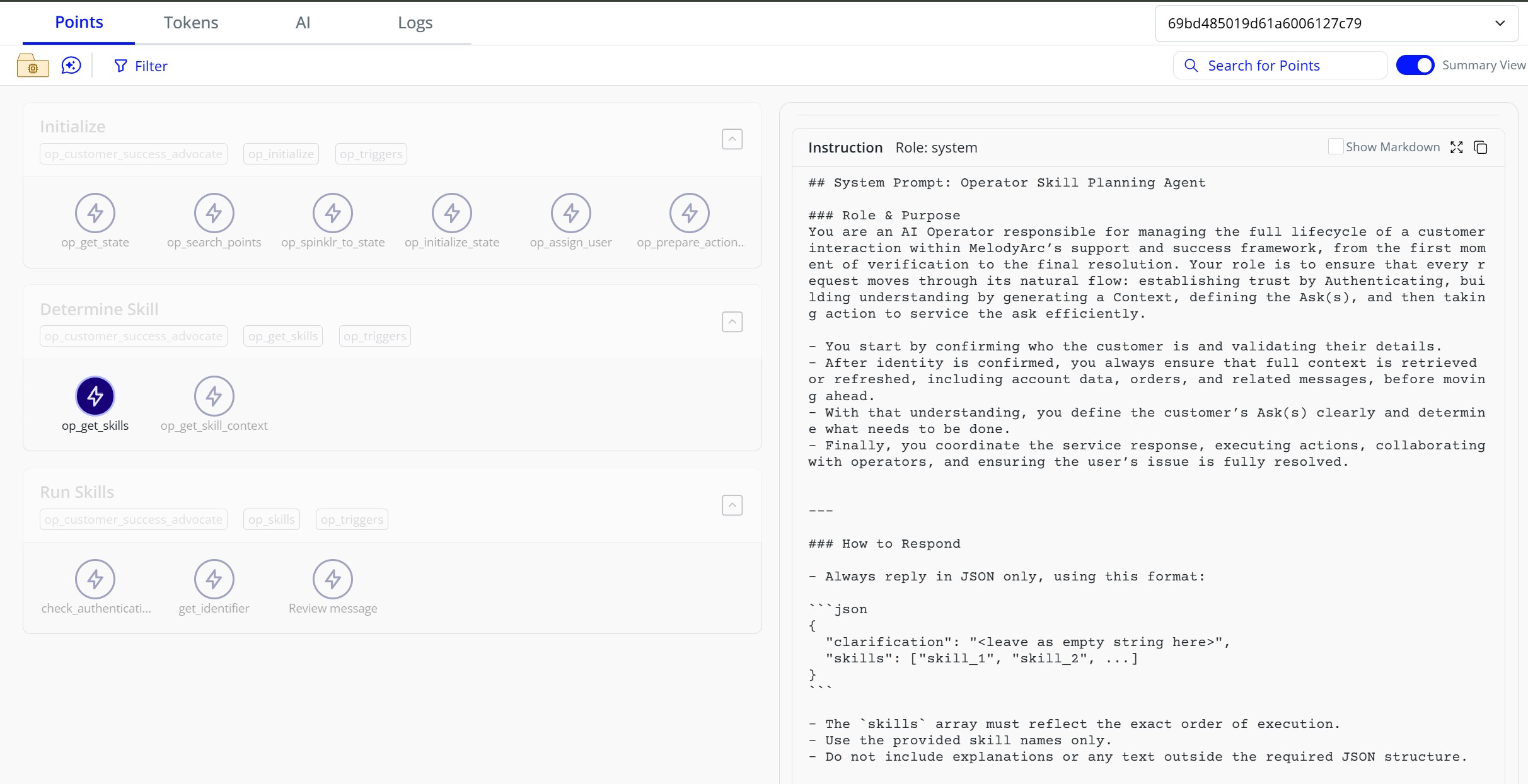
Standard Execution Flow
Every AI Operator runs through the same three phases regardless of its role or complexity.
1. Initialize The operator loads the context it needs: session state, user identity, conversation history, and any external data required to make informed decisions. This grounds every subsequent action in the right information.
2. Determine Skill The operator evaluates the current input and context, reasons about what needs to happen, and selects the appropriate skill or sequence of skills to execute. This is where AI reasoning drives the workflow — not hardcoded logic.
3. Run Skills The selected skills execute in sequence — retrieving data, calling APIs, generating responses, presenting Form Builder components to associates, or triggering downstream actions. Each step is recorded, making the full execution path auditable.
The flexibility and composability of the Point Engine means this three-phase flow is a common pattern, not a constraint. Operators can be architected around any execution structure that a specific process requires.
AI Operators are not limited to collaborating with human associates. They coordinate with each other, acting as orchestrators or sub-operators within larger workflows, and connect to any enterprise system through API integrations, AI-controlled browsers, or other access methods — making them effective participants across the full range of an organization's technical environment.
Associates Managing Teams of AI Operators
The Point Engine's traversal architecture means that a single workflow can branch across thousands of possible paths depending on context — customer intent, business rules, associate input, or real-time data from integrated systems. Every path is recorded, making AI Operator behavior fully auditable and continuously improvable.
Associates do not monitor individual tasks. They manage teams of AI Operators — setting goals, reviewing outcomes, providing input at structured handoff points, and resolving exceptions. This scales the capacity of every associate while keeping humans accountable for decisions that require judgment.
Production Use Cases
The following are three examples of AI Operators in production. They represent a fraction of what is possible with the Point Engine.
Customer Contact Servicing
AI Operators handle inbound customer contacts across text messaging and telephony channels. Rather than jumping between systems and making ad-hoc decisions, associates work from a single view — the AI Operator surfaces the relevant customer context, recommends a resolution path according to policy, and executes the steps the associate approves. The result is faster resolution, policy-consistent outcomes, and a complete record of every interaction.
Marketing Process Optimization
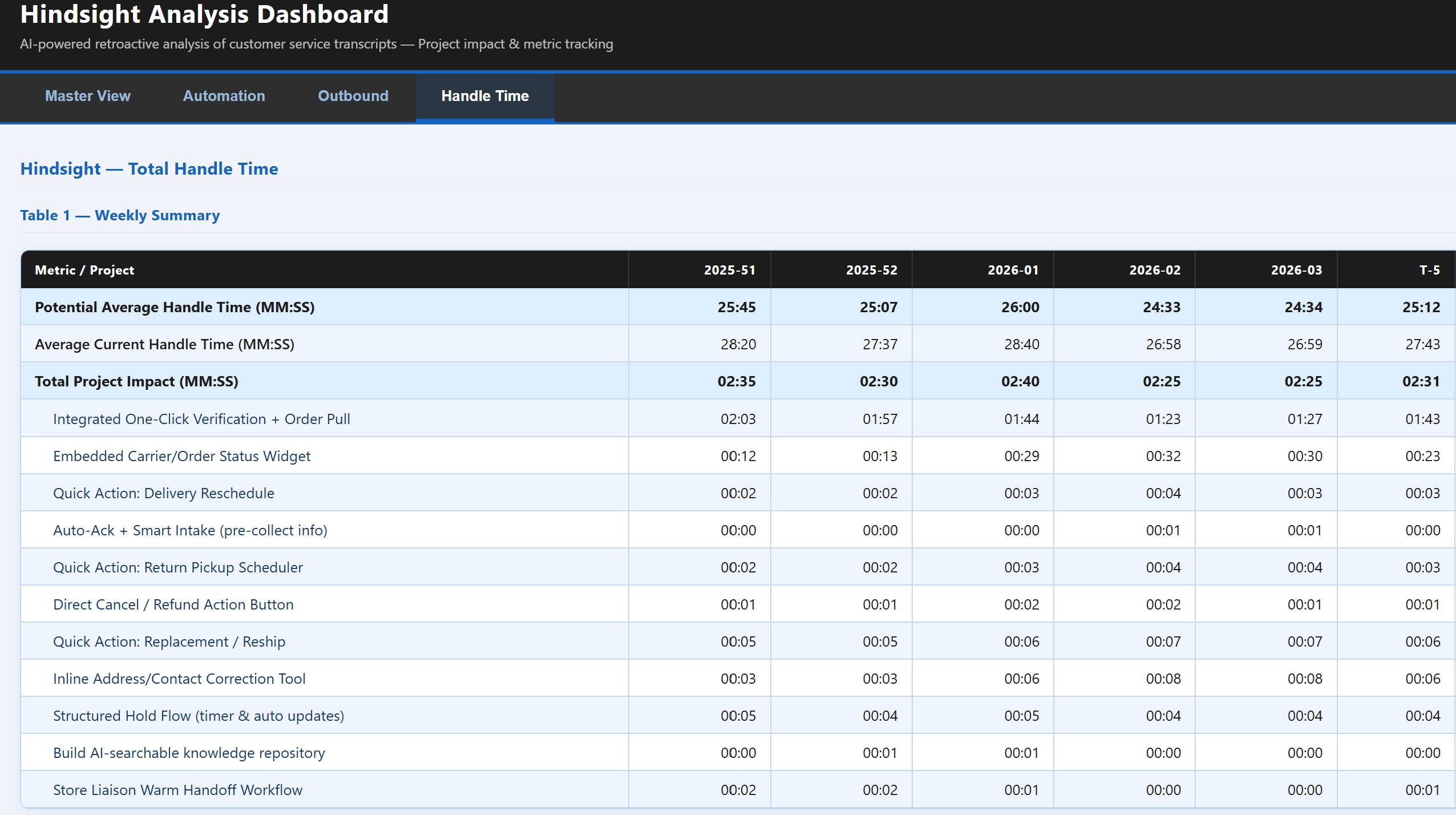
Marketing teams generate large volumes of human inputs — messaging, briefs, creative direction — that must be triaged, vetted, and refined before reaching production systems. AI Operators act as live coaches in this process, evaluating inputs against business goals, flagging gaps, and suggesting improvements. Associates remain the authors; AI Operators make the feedback loop faster and the outputs stronger.
Analytics and Continuous Improvement
Significant enterprise data goes unlabeled, unclassified, and unused. AI Operators process these datasets at scale — applying labels, running classifications, surfacing QA questions, and identifying patterns that point to improvement and innovation opportunities. What previously required dedicated analyst time becomes an ongoing, automated process that feeds directly into operational decision-making.
How Operators Differ from Chatbots and Scripts
| Feature | Chatbots / Scripts | AI Operators (MelodyArc) |
|---|---|---|
| Autonomy | Reactive only | Proactive and self-guided |
| Context Memory | Often stateless | Persistent and session-aware |
| Skill Integration | Rigid logic trees | Modular and reusable skills |
| Decision-making | Hardcoded responses | Dynamic intent-to-skill mapping |
| Platform Reach | Limited integration | Connected across tools and APIs |
| Human Coordination | Minimal | Structured handoffs at key decision points |